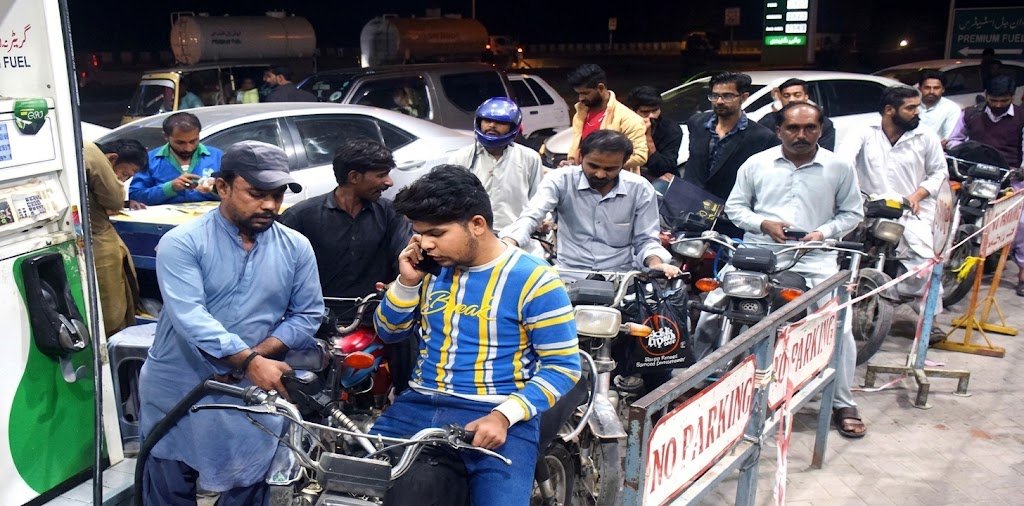
ISLAMABAD: The Government has raised the petrol and diesel prices today. According to the sources, the federal government has officially revised petroleum rates upward, as the government announces hike in petrol and diesel prices across Pakistan to reflect changing global oil trends and import adjustments.
According to details issued by the Oil and Gas Regulatory Authority (OGRA), the price of petrol has been increased by Rs 1.85 per liter, while high-speed diesel (HSD) has seen a hike of Rs 1.75 per liter.
Following this revision, the new retail price of petrol stands at Rs 377.91 per liter, and the new price for high-speed diesel has been fixed at Rs 399.82 per liter.
OGRA has issued the formal notification regarding the revised rates, which will take effect starting October 29. Officials confirmed that the price recalibration was necessary under the existing petroleum pricing mechanism as the government announces hike in petrol and diesel prices across Pakistan.
Fuel Prices in Pakistan Today
Fuel pricing in Pakistan serves as a primary driver of the national economy, directly impacting inflation, transportation logistics, and everyday living costs.
Under the government’s bi-monthly pricing mechanism, domestic petroleum rates are revised every fortnight based on fluctuations in international crude oil prices, exchange rate movements, import premiums, and refined product benchmarks published by Platts.
Today’s high fuel rates reflect persistent global market volatility and foreign exchange pressures on the Pakistani Rupee.
High-speed diesel is extensively used in heavy transport vehicles, goods transport fleets, generators, and agricultural machinery such as tractors and tube wells; consequently, any price increase immediately translates into higher freight charges and elevated prices for essential commodities and food items.
Petrol, widely consumed by commuters, two-wheeler riders, and private vehicle owners, directly affects household budgets and urban transport fares.
Beyond global market factors, federal levies—such as the Petroleum Development Levy (PDL)—and sales taxes constitute a substantial portion of retail fuel prices, making petroleum a major revenue generation source for the national treasury.
However, frequent price hikes create an inflationary ripple effect across energy, manufacturing, and consumer sectors, posing ongoing challenges for public purchasing power.
ALSO READ: Government Revises Fuel Prices in Pakistan, Decreasing Petrol and Increasing Diesel
As economic authorities balance fiscal targets with consumer stabilization, keeping a close check on domestic supply chains and global benchmark shifts remains critical, especially when the government announces hike in petrol and diesel prices across Pakistan.