
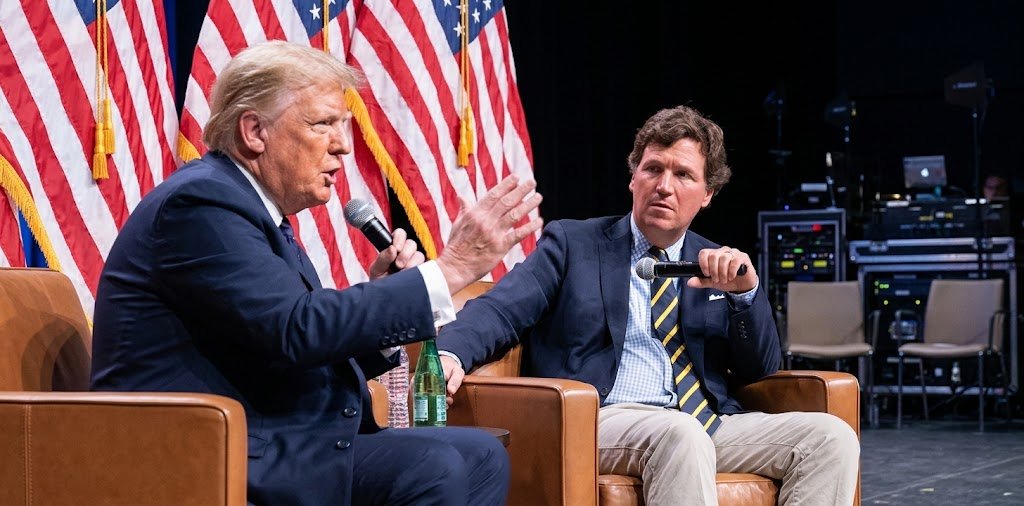
WASHINGTON: American journalist and conservative commentator Tucker Carlson has alleged that the Trump administration could consider a nuclear strike on Iran under intense pressure from Israeli Prime Minister Benjamin Netanyahu.
In a statement released on social media platform X, Carlson claimed that Israeli Prime Minister Benjamin Netanyahu, facing political turbulence following recent election results, needs a continued conflict and is pressing senior officials in the Trump administration for aggressive military action.
Carlson asserted that Trump considering potential nuclear option against Iran under pressure from Netanyahu has become a subject of discussion because conventional US weapons are ineffective against deeply fortified underground facilities, such as those inside Iran’s Pickaxe Mountain.
This statement follows recent remarks by President Donald Trump, who declared that the US has largely neutralized Iran’s nuclear program, leaving only one or two remaining fortified sites including the Pickaxe Mountain complex which he claimed could be dealt with in ten minutes.
However, warnings remain high that Trump considering potential nuclear option against Iran under pressure from Netanyahu could spark catastrophic consequences across regional energy markets and global security.
Israel’s Influence on President Trump and Its Causes
The geopolitical relationship between the United States and Israel during the Trump administration has been characterized by unprecedented strategic alignment, largely driven by Prime Minister Benjamin Netanyahu’s diplomatic access and shared foreign policy objectives.
This close alliance has significantly shaped US policy in the Middle East, particularly regarding regional security and the containment of Iran.
Several key factors contribute to this unique level of influence.
Both leaderships view Iran’s nuclear ambitions and regional proxy networks as existential threats to Middle Eastern stability, leading to closely coordinated defense strategies and intelligence sharing.
Furthermore, pro-Israel lobbying groups, evangelical Christian voter bases, and key conservative donors in the United States exert substantial domestic political pressure, creating strong incentives for the administration to align closely with Israeli government policies.
High-level access maintained by Israeli leadership to key US cabinet members, national security officials, and presidential advisors has also facilitated direct communication, ensuring Israeli security priorities remain central to US foreign policy decisions.
While critics argue that this close relationship risks dragging the United States into prolonged regional conflicts, supporters maintain that strong bilateral cooperation is essential for maintaining deterrence and safeguarding shared strategic interests in the region.