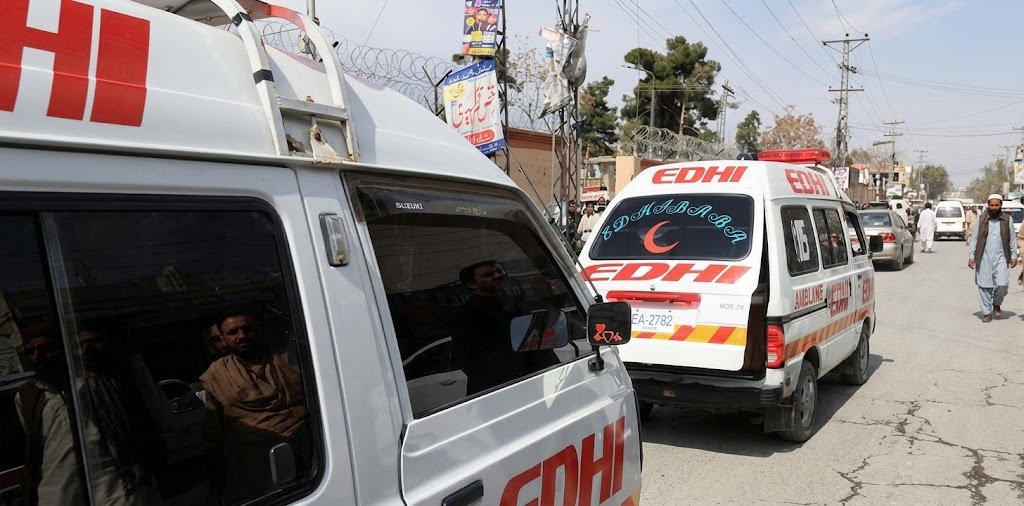
BOLAN: Husband killed his wife and three children in Kacchi area of Balochistan.
According to the details, In a horrific incident that has sent shockwaves through Balochistan, a man opened fire inside his home, killing his wife and three minor children in the deadly family disputes in Balochistan trend.
This tragic event occurred in the Balanari area of Kachhi district.
According to police authorities, the suspect, identified as Shabbir Ahmed Lashari, resorted to indiscriminate firing within his household in the village of Haji Taj.
The brutal attack resulted in the immediate deaths of his wife, Mst (N), and their three young children: Zamir, Nafisa, and Aliza. Lashari managed to flee the scene immediately following the commission of the crime.
Upon receiving reports of the shooting, a police team from Haji City arrived at the location.
The Station House Officer (SHO) for Haji City confirmed that the bodies have been taken into custody and transported to the Civil Hospital in Sibi for legal formalities and post-mortem examinations.
Family sources have provided an indication that the suspect, Shabbir Ahmed Lashari, may have been suffering from mental instability, suggesting this was a factor in the violence often associated with deadly family disputes in Balochistan.
The police have registered a case regarding the quadruple homicide and have initiated a massive manhunt to apprehend the fugitive suspect.
Raids are being conducted at various potential hideouts.
The SHO emphasized their commitment to bringing the perpetrator to justice swiftly, highlighting the devastating consequences of deadly family disputes in Balochistan that continue to plague local communities.
A Concerning Trend: Note on Killings in Deadly Family Disputes in Balochistan
Balochistan, a province in Pakistan characterized by intricate tribal systems and deep-seated cultural traditions, has been grappling with a deeply concerning and escalating trend: killings linked to deadly family disputes in Balochistan.
These disputes, often originating from seemingly minor arguments over land ownership, resource allocation, water rights, inheritance, or perceived violations of ‘honor’, frequently escalate into prolonged and violent feuds.
The pervasive reliance on tribal systems and traditional justice mechanisms, such as jirgas (tribal councils), can sometimes inadvertently exacerbate these conflicts.
While these systems aim for resolution, their decisions can be contested, leading to further retaliation and bloodshed.
Furthermore, deep-rooted cultural codes that prioritize family honor can compel individuals to resort to violence to avenge perceived slights or dishonor, perpetuating a cycle of retributive killing.
This can make resolving deadly family disputes in Balochistan complex for formal state mechanisms.
The prevalence and impact of these disputes are compounded by the proliferation of weapons, socio-economic challenges, and sometimes, a lack of trust in the formal state justice system.
Weak economic opportunities and resource scarcity can heighten competition for land and resources, adding fuel to potential conflicts.
The physical distance of remote communities from police and judicial infrastructure further hinders the state’s capacity for timely intervention and deterrence.
ALSO READ: Husband Email Divorce Prank Backfired for Him
The tragic event in Balanari is a stark reminder of the devastating consequences when deadly family disputes in Balochistan are allowed to fester and turn violent, robbing children and women of their lives.