NEW YORK: Pakistan officially opposes veto power expansion in UN security council.
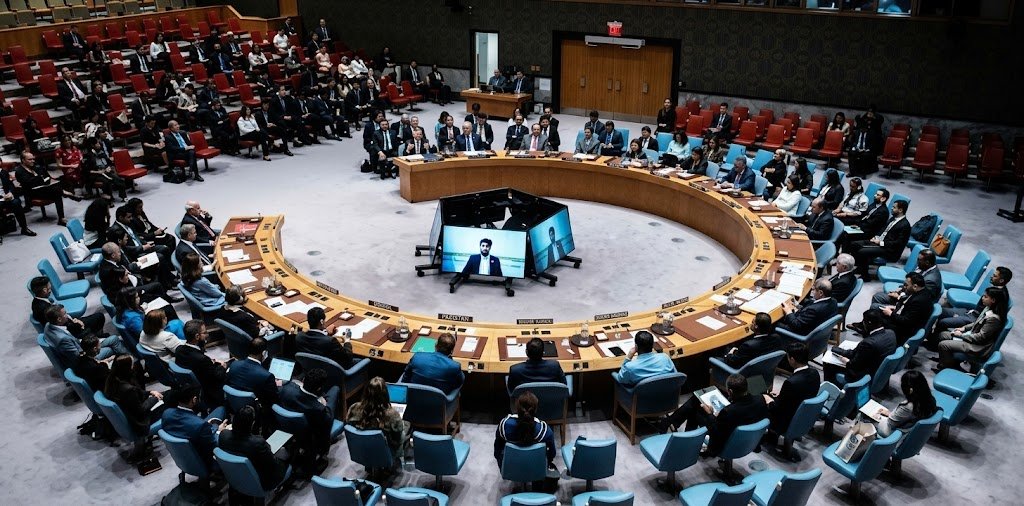
According to the details, Pakistan has officially reiterated its firm opposition to the UN Security Council veto power expansion, emphasizing the urgent need for comprehensive, democratic, and equitable reforms to restore the credibility of the United Nations.
Speaking at the United Nations General Assembly, Gul Qaiser Sarwani, Counsellor at Pakistan’s Permanent Mission to the UN, clearly articulated Pakistan’s stance against inducting new permanent members and extending veto privileges to additional countries.
He warned that any further expansion of veto privileges would exacerbate existing structural inequalities and deepen institutional paralysis within the 15-member body.
Sarwani stressed that Pakistan advocates for the complete abolition of the veto or, at a minimum, the imposition of severe restrictions on its application, noting that the misuse of the veto severely damages the organization’s global standing and effectiveness.
Furthermore, Pakistan reaffirmed its strong support for General Assembly Resolution 76/262, which mandates a formal debate in the General Assembly whenever a veto is exercised in the Security Council.
The Pakistani diplomat urged an increase in the number, representation, and decision-making role of non-permanent, elected members to ensure broader international representation.
He underlined that Security Council reform must be addressed simultaneously across all five core reform clusters under a single, unified package deal, declaring that reforms must benefit all member states equally under the principle of reform for all, privilege for none.
Through this principled stance, Pakistan continues to lead opposition against attempts aimed at UN Security Council veto power expansion, advocating instead for an accountable governance framework.
Possible Impacts of Increasing Veto Power Members in the Security Council
Expanding the veto power to additional members within the United Nations Security Council would carry severe geopolitical and structural consequences for global governance.
Adding more veto-wielding members would dramatically increase the likelihood of institutional paralysis, making it virtually impossible to reach consensus on critical international security crises, peacekeeping mandates, and humanitarian interventions.
This move would also deepen global inequality by expanding permanent privileges to a select group of countries, which perpetuates power imbalances and leaves non-permanent and smaller developing nations underrepresented and marginalized.
Furthermore, the frequent misuse of the veto to protect national geopolitical interests undermines the foundational principles of the UN Charter, meaning that multiplying veto privileges would further erode diplomatic trust in the UN’s capacity to maintain world peace.
True reform necessitates democratizing the Security Council through expanded elected representation and enhanced accountability, whereas multiplying veto privileges directly runs counter to equitable global governance.
ALSO READ: Pakistan Urges UN Security Council to Close Terrorism Sanctions Gaps as Threats Evolve
Ultimately, resisting the UN Security Council veto power expansion remains essential to protecting the multilateral framework and ensuring equal representation for all sovereign states.